

Author’s note: In Affective Socialization Theory (AST), there is a heavy focus on diagnosing the disease, analyzing how the coercive architecture of capitalism physically wires our nervous systems for anxiety, predation, and burnout. But a diagnostic framework is useless if it cannot point to a cure. Before we can fully operationalize the math of how to dismantle the capitalist macro-environment, we have to define exactly what we are building to replace it. We have to define socialism. Not as a utopian buzzword, but as a concrete, structural alternative. To do that, we must trace its origins, strip away the propaganda, and look at the empirical history of the concept.
In Parts 1 and 2 of this series, we defined the foundational concepts of socialism and traced its origins back to the shifting material conditions of the Industrial Revolution. We examined the transition from early utopian experiments to the scientific framework developed by Karl Marx and Friedrich Engels. That framework introduced dialectical and historical materialism, illustrating how class struggle and conflicting forces in society drive the emergence of new socioeconomic systems. With that groundwork established, we can now explore how those foundational theories fractured into the distinct ideological branches we see today.
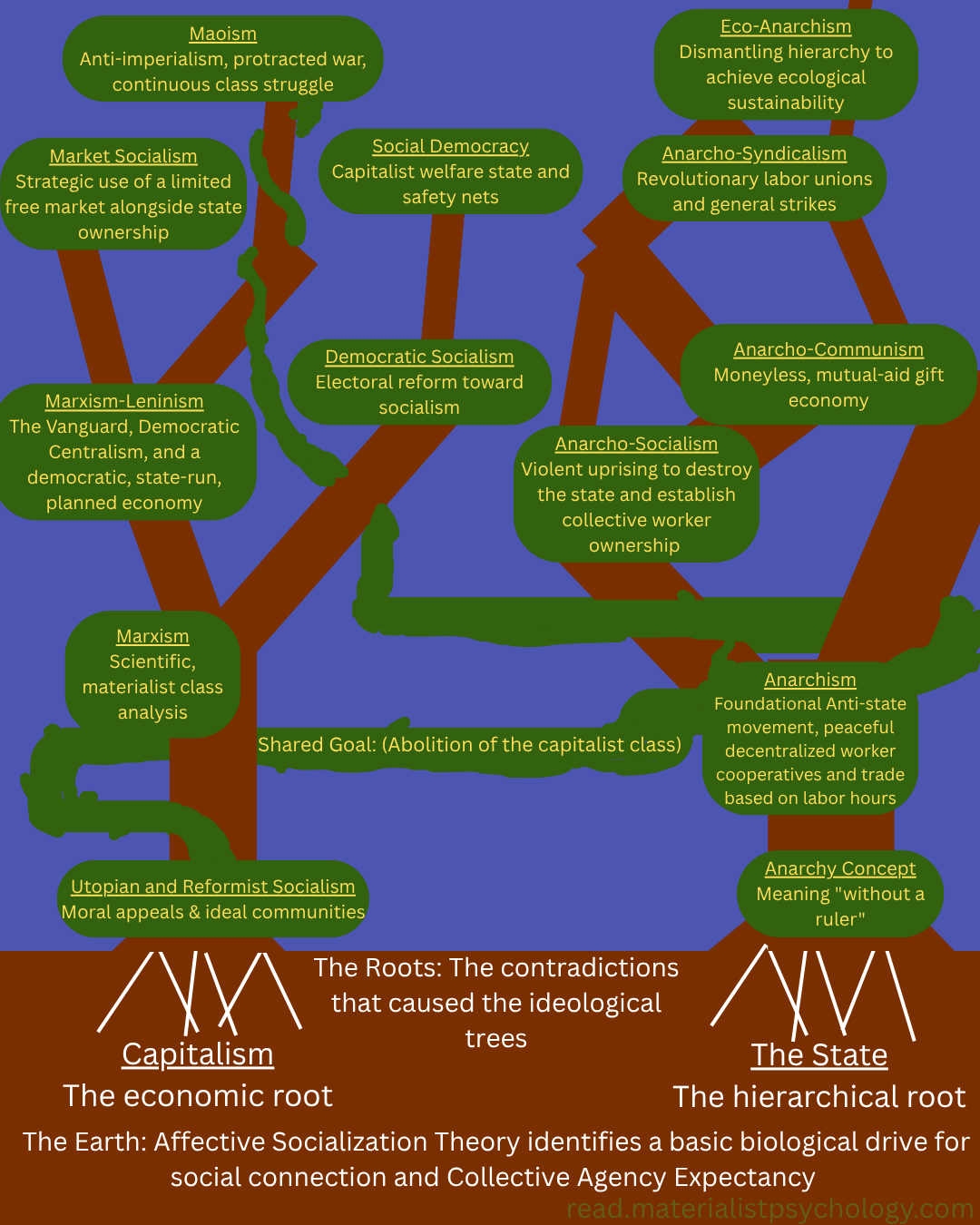
Marxism Leninism
Lenin’s Key Contributions and the Bolshevik Split
As I stated previously, Marx’s ideas gradually became, in the eyes of many people, synonymous with socialism itself. The words “Marxism,” “socialism,” and “communism” also started to be used interchangeably in some of the public discourse on the subject. There were some other perspectives, like anarchism, which will be explained later on; for now, we will discuss Marxism-Leninism. Named after the socialist thinker, writer, organizer Vladimir Lenin and his further development of Marxist theory, Marxism-Leninism gradually became the self-described ideology of the USSR (a.k.a. the Soviet Union) and many more self-described socialist states that came after.
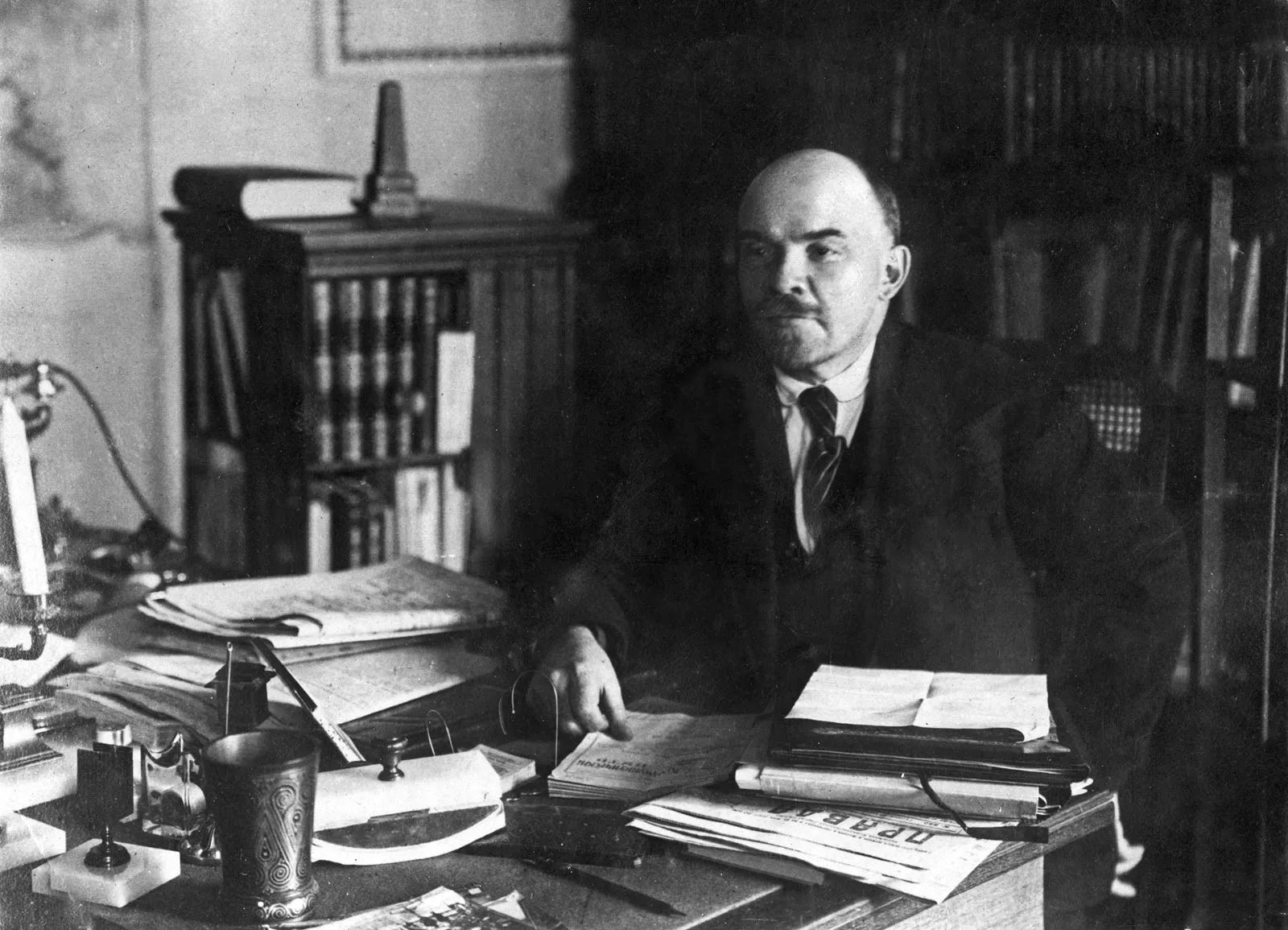
Some of Lenin’s key contributions to Marxist theory were the idea of the vanguard party and Democratic Centralism. Both of these ideas distinguished the Bolshevik Party from other Marxist and socialist parties and movements at the time. The Vanguard Party was a concept that there should be a political party made up of trained (in socialist theory and practice) professional revolutionaries, and that this party would be a vanguard to the working class’s struggle for liberation. A vanguard in battle formation is a small group at the front of the army that leads the rest of the army into battle. Democratic Centralism was the concept that within the political party, all decisions made by the vote of the Congress would be binding on all members; even if a member personally disagrees with the policy, they are expected to follow it, and if they don’t, they could risk losing status or membership. These two concepts were seen as ways to overcome the stagnation and reformism that were observed in other European socialist parties (in other countries) at the time. The Bolshevik Party was originally a faction of the RSDLP (the Russian Social Democratic Labour Party), but a split in the group occurred over key disagreements the other members (called the Mensheviks) had with key concepts of Lenin’s theory, which was written on pamphlets and passed out in cities and read among party members who debated the ideas.
Tactics, the Duma, and the Dictatorship of the Proletariat
All of the disagreements were on tactics; both parties had the same goals, that of a socialist society that ended oppression of the working class. How that transformation of society was achieved was not just a matter of opinion to these people debating in these political parties; it was a matter of life and death. Seriously. It may seem so abstract to us to think about different ideological perspectives of the issue and wonder why it matters, but at this time, revolutionaries who advocated for the end of the Tsardom (an autocratic monarchical system where the Tsar and his family have absolute, unquestionable political power) were being sent to prison deep in the Siberian wilderness, or even killed.
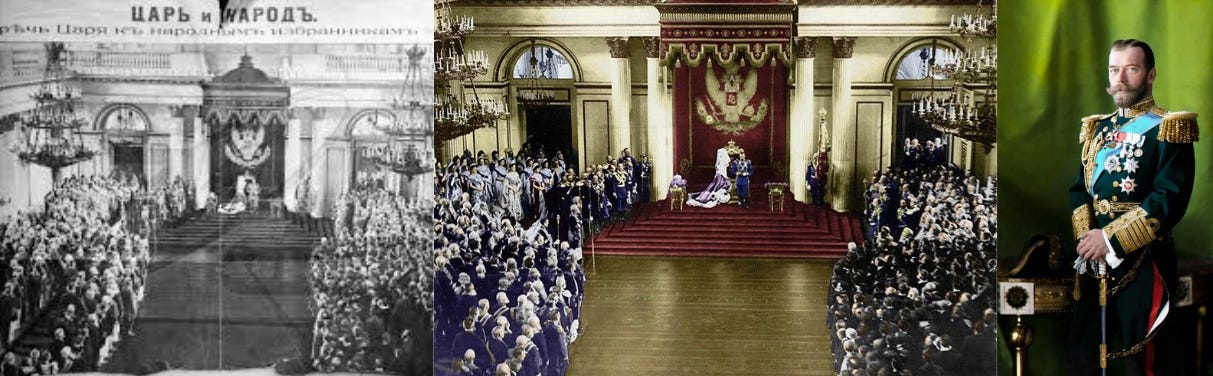
It was not just their own lives on the line; the lives of all the people who were suffering under the oppressive tsarist regime were on the line as well. Many preventable deaths from war and other disconnected, incompetent, and greedy governmental policies. These people’s future, their children’s future, were all on the line. These disagreements in policy were ones that would make or break the revolution in the eyes of these opposing sides.
One of the first disagreements, which caused an initial split of the party into factions (before the group fully split), was on the matter of the Duma, which was basically the newly created legislative congress of Russia. The thing about the Duma, though, was that the Tsar still retained the right to veto any law that was made by this legislative congress. So instead of it truly being a governing body with power to allow democratic processes to make laws, this Duma could be seen as more of a democratically run suggestion box that the Tsar could entertain if he wanted to. The members of the RSDLP who became known as the Mensheviks came to the conclusion that, although it was not a true legislative congress, reform might still be possible through this process, and eventually, maybe, the Tsar would give up the control he had, and it would transition into a real congress.
The party members who became known as the Bolsheviks agreed that this was ineffective and would only hold the movement back. Lenin and others in the party argued that the party should boycott the Duma elections and work on creating its own organizations, even underground illegal ones (because certain political parties and views were illegal at the time), because the power is in the workers; all they need to do is be organized and led by the vanguard party, which, with their socialist theoretical and practical training, would lead the working class to overthrow capitalism and create a new state based on the dictatorship of the proletariat (a Marxist concept of the working class, the proletariat, dictating society, instead of the capitalist class dictating them, called the dictatorship of the bourgeoisie). Later they would go on to have a position of entering candidates in the elections to increase public awareness of their cause and intended policies, showing that it was not about strict dogmatic decisions on what is the “right” strategy, but instead about calculated decisions on what is the right move for the right time.
Theory, Practice, and the Scientific Approach
The Mensheviks also believed that it was not immediately necessary or practical to try to construct the dictatorship of the proletariat upon the overthrow of Tsardom. To them, it was more practical to create a wide base of support which allied with liberal bourgeois (capitalist) parties that wanted to establish a bourgeois democracy (a democratic revolution that does not aim to establish socialism, allowing capitalism to continue to exist and claim the reins of power). By doing this, they believed that they would be more successful, and it makes sense, this policy of socialist parties joining forces with liberal capitalist parties (that also want democracy but wanted capitalism to continue with it) was one that was followed by many other European socialist parties, and it had succeeded in ending some monarchies in some countries, turning a few states in Europe into liberal Democracies. However, as this was achieved, capital dominated and did indeed take the reins of power, and this was the stagnation that Lenin wanted to address with his theories.
This is where we can see why his ideas are labeled “Marxism-Leninism.” The emphasis on the scientific approach that Marx took in his analysis of capitalism and what socialism could be was almost like a tradition that was followed. Lenin looked at what the problems and setbacks of other European socialist movements were and theorized possible solutions to them, and this was not just in this specific case. Lenin’s writings, like Marx’s, heavily emphasize the concept of theory, practice, theory, practice. Empirically observing the material conditions and present class conflict, coming up with a theory of how the oppressed class can be liberated, putting those ideas into action, then seeing what worked and what could be improved on, then reapplying that revised theory to the practice, and so on, and so on. Marx once remarked that “the philosophers have only interpreted the world in various ways, the point, however, is to change it” (Marx, Collected Works 5), and this scientific-method style of approach to social change was something the Bolsheviks took very seriously. In real time they were helping unionize and organize workers for strikes and rebellion, then going back to the pen and paper, describing the movement’s progress and events that had occurred, critically analyzing them, and then offering any suggestions for improvement of methods or highlighting of what worked and why, then continuing that process over and over again, as the movement grows.
The Ideology of the Superstructure
The Mensheviks also did not agree with the concepts of the vanguard party or democratic centralism, and would continue to write and advocate for their ideas, and so eventually were kicked out of the party. The party’s name was now “the Russian Social Democratic Labour Party (Bolshevik),” and this party would end up winning the power struggle after the Tsardom was dissolved in 1917, and would lead the country into its plan to create a socialist state (or country), and soon after changed its name again to become the “CPSU” (Communist Party of the Soviet Union).
This revolution was a very influential moment in history; it inspired similar movements to form all across the world, but what did this new strain of socialist thought mean in terms of state policy? What policies characterize a “Marxist-Leninist” government? The relevance of this question is the fact that since this 1917 revolution, many countries around the world have formed from revolutions led by self-described “Marxist-Leninists.”
To try to understand the policy of a nation without understanding the ideology of the superstructure (the broader society and its institutions) can lead to a confused or entirely incorrect analysis. Without understanding what the intended purpose of the policies passed by governments is (which is revealed in examination of the ideology of the superstructure), we can look at policies and look at their effects, or even assumed effects, and guess what the purpose is, but what will we then say when the same government passes a new policy that contradicts, or even seems antithetical to, the purpose previously assumed? This is why, in political discourse, discussion of the “ideology of a nation” is remarked on. Stigmatizing these labels increases confusion, and so that is why an essay defining socialism requires the length this one does.
In the ideology of Marxism-Leninism, as previously stated, the scientific approach to creating a better society is emphasized, and ideally, practiced, as seriously as the science of any other field, and so the structuring of the state after the 1917 revolution, and the policies passed by the new government, can best be understood in this sense. With this in mind, many contemporary commentators on the subject will also use the term “socialist experiments” to describe these countries.
State Ownership and Workers’ Democracy
Marxist-Leninist socialism is most often characterized by a state-run economy, and this, contrasted to the liberal concept of freedom of individuals to own entire companies and exercise personal control over industries, has often been labeled as evidence of “authoritarianism” or a “dictatorship,” but to the socialists of the USSR, their society was even more free because of this state ownership. The reason being that these state-owned industries were owned by the state for the purpose of enforcing these industries to be democratically run, with the power of the state, which was described by many citizens and outside observers to be a workers’ democracy, a democracy without influence from single individuals with enough wealth to influence the outcomes of the elections.
Pat Sloan, a British economist and academic, lived and worked in the USSR for 6 years (from 1931–1937) and, upon his return to Britain, wrote the book Soviet Democracy, which was an analysis of life in the USSR and the new economic system the country had developed. He concisely bears witness to what I have described, in these two brief quotes from the book, where he says, “The means of production and propaganda are socially owned and controlled, and there is no longer the domination of society by a small class that owns the property,” “To-day the actual experience... has shown how real democracy can be, once the power of private property is finally broken” (Sloan, Soviet Democracy). More detail on the content of the policies and their effects will be provided in a later section, but for now let us move on to the other perspectives of contemporary socialist thought.
Democratic Socialism and Social Democracy
The Evolution of the Terms
Before the separation of the Bolsheviks and Mensheviks, the words Democratic Socialism and Social Democracy were broader, encompassing terms that could be synonymous with Marxism or socialism itself, but that would change, and these terms would develop distinct, commonly accepted definitions. Understanding the significance of this split, and how this new strain of socialist thought (Marxism-Leninism) influenced the defining thereafter of all these other terms, is key to understanding not only what these terms mean, but how they formed and became the more specifically defined concepts they are now. What the Mensheviks advocated for, pursuing political struggle in Congress through voting for policies that would create socialism, was a similar strategy of socialist movements all throughout Europe, and when the Bolsheviks came up with a new strategy toward socialism that did not fit in those parameters, it became a new thing, leaving the Mensheviks and all the other socialist movements at the time who followed those same strategies to be defined by that same form of struggle that they pursued. When the “RSDLP (Bolshevik)” became the Communist Party of the Soviet Union, the term “communism” became a word that many people outside of the USSR used to describe the Marxist-Leninist socialism of the USSR. To be clear, the Marxist-Leninists in the CPSU did consider themselves communists (and also socialists), but they considered their economic and political system to be a socialist one. This is because they believed communism would be a future ideal society where the state (the power structure of the government) is no longer needed, but the workers’ democratic state was a socialist state.
Welfare Policies and Modern Political Confusion
With Democratic Socialist movements stagnating in their goals to democratically vote in socialism, and economic crises continuing to devastate the lives of those living under the boom-and-bust cycles of capitalist economic systems, the appeal of Marxism-Leninism reached working-class people from other countries, and many communist parties were created with the intent of rallying the people for a mass movement which would overthrow capitalism and create a socialist state. Even in America this became very popular, and after the stock market crash of 1928, there was a wide base of support for socialism, and Marxist-Leninist tactics to achieve it, in the US and many other European countries as well. In response to this, in what is seen as a strategic retreat of the capitalist class in their power struggle over the workers, some of these governments began passing welfare policies. These welfare policies were basically safety nets, like Social Security and other publicly funded programs that help those in need.
This is where the difference in the modern, commonly accepted definitions of Democratic Socialism and Social Democracy can be explained. Democratic Socialism and Social Democracy are often confused, and can both simultaneously be represented in one government, as different people within the government will have different ideas on what the goal is. For example, two senators in the US could both identify as Democratic Socialists, but one could have the intention of actually using their vote toward an end of creating a socialist society, and the other could think the current system is fine, but that welfare reforms and public services are good, and not knowing or caring to be strict in definition, they both identify as “Democratic Socialists.”
H.G. Wells, Stalin, and the Planned Economy Debate
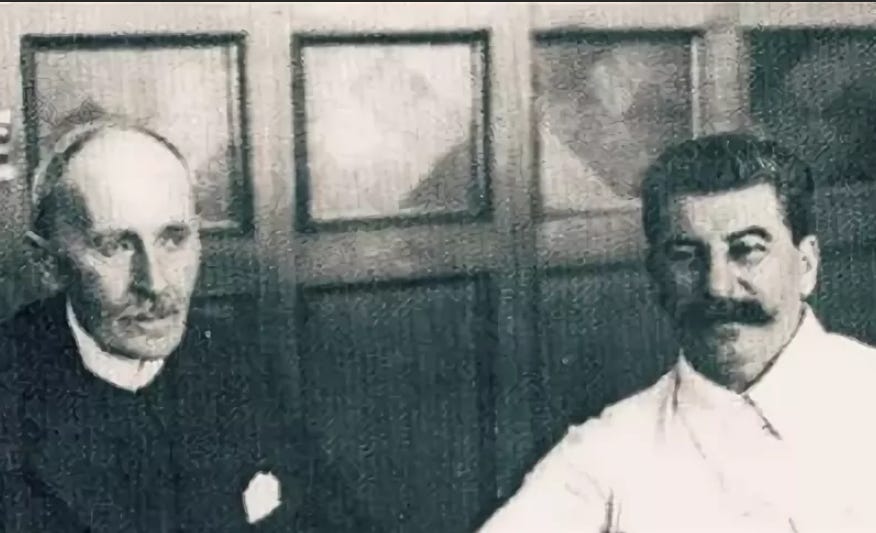
H. G. Wells, the popular British science fiction writer who wrote “The War of the Worlds” (which has now been adapted into many movies), liked to engage in public discourse on big topics in his day, and in 1934 he met with Joseph Stalin, the leader of the CPSU, to talk about this concept we have been discussing and what socialism meant. He begins the discussion with this statement:
“My visit to the United States excited my mind. The old financial world is collapsing; the economic life of the country is being reorganized on new lines. Lenin said: ‘We must learn to do business, learn this from the capitalists.’ Today the capitalists have to learn from you, to grasp the spirit of socialism. It seems to me that what is taking place in the United States is a profound reorganisation, the creation of planned, that is, socialist, economy. You and Roosevelt begin from two different starting points. But is there not a relation in ideas, a kinship of ideas, between Moscow and Washington? In Washington I was struck by the same thing I see going on here; they are building offices, they are creating a number of state regulation bodies, they are organising a long-needed Civil Service. Their need, like yours, is directive ability.”
We see here that Wells identified socialism as being a planned economy, and this is one of the features of the socialist state of the Soviet Union, because the workers themselves democratically ran their industries. The subjective goal of this system was for the workers to be able to determine their own destiny by planning their economy (what their labor went towards) based on their collective needs. Capitalism, on the other hand, was described as anarchy in production, a survival-of-the-fittest competition to see who can accumulate the most and find the most profitable industry to do it in. In capitalism, decisions over what would be produced, and how much of it, were left to the decisions of single individuals or small groups of people (such as in corporations with boards); socialism, in contrast, promised a more democratic way of determining what we collectively produce with our collective effort, as a people.
Wells saw the social democracy that was happening under FDR’s New Deal policies and saw it as socialism itself. Trying to grapple with these two different perspectives that the USSR and the US government seemed to have on socialism, Wells posits that these movements are fundamentally the same in their aims, but only at different “starting points.” Stalin begins his reply by immediately refuting the idea, and then elaborating on it,
“The United States is pursuing a different aim from that which we are pursuing in the U.S.S.R.
The aim which the Americans are pursuing arose out of the economic troubles, out of the economic crisis. The Americans want to rid themselves of the crisis on the basis of private capitalist activity, without changing the economic basis. They are trying to reduce to a minimum the ruin, the losses caused by the existing economic system. Here, however, as you know, in place of the old, destroyed economic basis, an entirely different, a new economic basis has been created. Even if the Americans you mention partly achieve their aim, i.e., reduce these losses to a minimum, they will not destroy the roots of the anarchy which is inherent in the existing capitalist system. They are preserving the economic system which must inevitably lead, and cannot but lead, to anarchy in production. Thus, at best, it will be a matter, not of the reorganisation of society, not of abolishing the old social system which gives rise to anarchy and crises, but of restricting certain of its excesses. Subjectively, perhaps, these Americans think they are reorganising society; objectively, however, they are preserving the present basis of society.
That is why, objectively, there will be no reorganisation of society.
Nor will there be planned economy. What is planned economy? What are some of its attributes? Planned economy tries to abolish unemployment. Let us suppose it is possible, while preserving the capitalist system, to reduce unemployment to a certain minimum.
But surely, no capitalist would ever agree to the complete abolition of unemployment, to the abolition of the reserve army of unemployed, the purpose of which is to bring pressure on the labour market, to ensure a supply of cheap labour. Here you have one of the rents in the ‘planned economy’ of bourgeois society. Furthermore, planned economy presupposes increased output in those branches of industry which produce goods that the masses of the people need particularly. But you know that the expansion of production under capitalism takes place for entirely different motives, that capital flows into those branches of economy in which the rate of profit is highest. You will never compel a capitalist to incur loss to himself and agree to a lower rate of profit for the sake of satisfying the needs of the people. Without getting rid of the capitalists, without abolishing the principle of private property in the means of production, it is impossible to create planned economy.”
This detailed explanation of the perceived fundamental differences in the economic systems represents the development of the defined differences between them in public consciousness as a whole. In response to Stalin’s last quote, Wells tries to label this American reform as “socialism in the Anglo sense of the word,” and Stalin replies, questioning what kind of socialism this “Anglo socialism” is, giving the impression that, in the eyes of Marxist-Leninists of the time, what their government was doing was the “real” socialism.
The Modern Welfare State
Social Democracy and Democratic Socialism have continued to have support to this day, and have influenced some countries into developing what is nicknamed a “welfare state,” one where citizens have many universal public services and rights, usually including things like free or universal healthcare, free education, and other services that increase quality of life. Examples of these systems are often shown in isolation from context, abstract. They are presented as successful examples of what things could be like if we just voted for the “right policies,” ignoring the context which gave rise to these certain states, a fuller analysis of it as a whole. While a more detailed analysis of these policies and the outcomes of these systems will be saved for the relevant chapter, it can be remarked here that Social Democracy and Democratic Socialism, in the minds of many people today, represent not only one of the two main strains of socialism, but even “socialism” itself. With the other main strain, Marxism-Leninism, being seen as “communism” by many people today who do not live in a Marxist-Leninist country, “socialism” has become a word commonly used by many to mean what, by more specific definition, would be called Democratic Socialism and/or Social Democracy. With the two main currents in contemporary socialist thought now identified, we can look deeper into the subject by examining a few more strains (of socialist thought), which arose alongside, or out of, the previously discussed two main currents.
Market Socialism
Strategic Concessions and the Free Market
Many ML (Marxist-Leninist) socialist state experiments that formed around the world tried to keep firm on their abolition of private property; the overthrow of it was a core point of Marxist theory in general, but even the government of the USSR chose to allow some private ownership during the first few years after its founding for a limited time, but why? The answer lies within one of the other core points of Marxist theory, that socialism must be scientific to be successful. In various self-described Marxist-Leninist countries, there are times when allowing a “free market” (one where profit-driven business is allowed and can be owned and run by individuals instead of collectives) has been seen as a scientifically based strategy to keep the system alive (and its subjective ideological goals for the state preserved along with it). In the case of the USSR, when the NEP (New Economic Policy) was in effect from 1921 to 1928, although private business was allowed, people who engaged in these private businesses, and their economic interests, were not allowed to be represented in the government. For other countries, like China, economic reforms that allowed a private economic sector eventually led to capitalists being allowed to be represented in the People’s Congress, becoming acknowledged as a part of the population that needs to work with the other classes, under the directive of the elected members of the communist party, for the collective benefit of all the people in the country as a whole. Sanctions and other forms of economic and political pressure were systematically placed on countries that created Marxist-Leninist governments by the capitalist world powers (the US and other European countries), which made it difficult for the complete abolition of private property to be sustainable for the material needs of the population. The reason is that over the 1900s, the economies of countries around the world became increasingly interconnected and interdependent.
Imperialist Pressure and Economic Reforms
To be able to maintain a modern standard of living, trade with other countries became increasingly necessary, and, understanding this, the US and allied nations strategically isolated these Marxist-Leninist nations from the global trade system that most of the rest of the world took part in, and in doing so achieved their aims of getting capital to penetrate these nations (by that economic pressure influencing these nations to change their policy to meet the demands of the imperialist powers, which would then allow them to participate in the global trade economy set up by these imperialist powers). Economic pressure would also be exerted by withholding aid, for example, the World Bank, which was an international organization created by these capitalist nations with a self-described purpose of giving loans to countries in economic need, set a list of conditions that the government of Vietnam had to agree to implement in their policy to receive these loans. These loans were necessary because of the wars of defense from these capitalist nations who wanted political control over the nation’s resources, which, even after these wars were won by the Vietnamese people, left sanctions, economic isolation, and a country destroyed by bombings. These loans came with conditions that private property accumulation would be made legal, which then made it so the capitalists of these nations could use their wealth to come over to the country and buy the land and resources for their own profit, not to benefit the people of Vietnam, but their own private wealth. The reforms made to receive these vital loans are called the “Doi Moi” reforms in Vietnam. Countries like China, Cuba, and Vietnam have all been able to keep their identity as socialist nations (run by communist parties) and have had varying ratios of the power of the private sector (businesses owned by private individuals or corporations) and the public sector (businesses or public services owned and run by the government for the intended collective benefit of the whole population) because, even with these reforms, the state retains power and usually retains ownership of many key industries and service-based organizations. These nations’ economies are contemporarily described as market socialist.
Maoism
Adapting Marxism to Colonized Nations
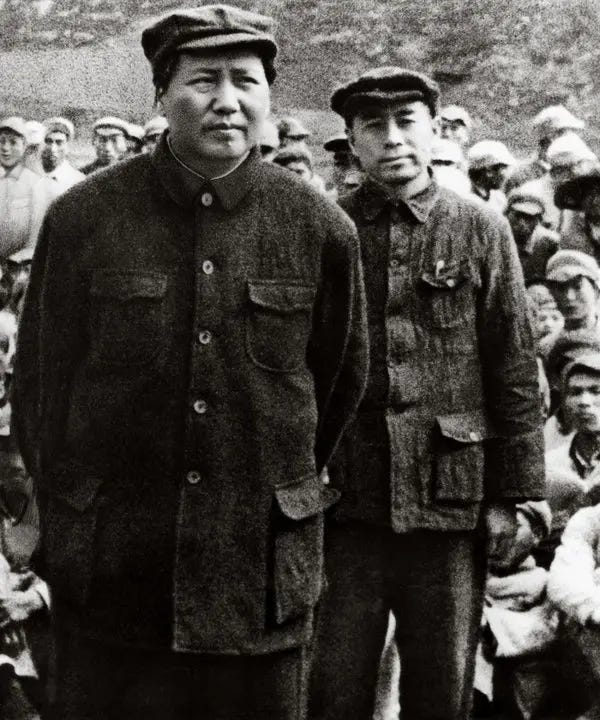
Maoism is also sometimes called Marxism-Leninism-Maoism, or MLM, because the people who follow it describe Mao Zedong Thought (or Mao’s ideas) as a continuation and development of the ideas from Marx to Lenin, a continuation and development of the scientific process of understanding our socio-economic reality and finding a scientific solution for its problems. While China itself retains its self-described ideological identity of being “Marxist-Leninist,” considering Mao’s ideas to be an application of Marxist-Leninist theory to the conditions of China in his time, Maoists, on the other hand, believe that Mao’s ideas represent an ideology of its own, with its own principles and analysis. Maoists point out Mao’s emphasis on how Marx originally believed that socialism would occur first in the “economically advanced countries” (the countries where capitalism had developed and created much wealth, and where most of the country is now employed by wage labor), but that China’s struggle for liberation from colonial powers and its alliance of members of the industrial working class and the peasant class (this alliance also being a feature of the Soviet Union’s founding) made the conditions for socialism to develop more ripe than in more advanced capitalist nations, which had many socialist parties that failed to gain any real political power.
To Maoists, imperialism has an effect on the dialectical struggle between the classes, and on the emergence of socialism. Because the most advanced capitalist nations then enforced capitalism on virtually the rest of the world by conquest and economic pressure, and thereby, with their earlier start that gave them time to develop before these other countries even came into the system, these countries would exercise economic control over these other nations through the enforced legal system of “private property.” As discussed before, forcing another nation’s government to enshrine private property into law makes it legal for the rich ruling class of the enforcer country to go there and buy the land and resources that produce wealth; thereby the potential of wealth and what it can create is not with the people of the nation it is being extracted from, but with those private individuals that came from the “economically advanced countries,” and these private individuals usually pay taxes, and by this and other ways, much of the wealth produced by some countries (the oppressed countries) is being systematically transferred to these exploiting, “economically advanced countries.” So, in the Maoist perspective, socialism will not first arise out of the more advanced capitalist countries, because of the contradiction between the fact that the working class in these countries are exploited for their own labor by their own capitalists and at the same time are benefactors of the imperialist accumulation of wealth and resources their countries’ capitalists provide. Conversely, the domination of foreign capital and wealth over their land and resources made the citizens of poorer countries, who were coming out of pre-capitalist economic and political systems, desire a better alternative to the ideology of the invading forces, and so it made them more likely to not only understand the necessity of socialism but, faced with imperialist violence, fight for it. The term “Third-Worldist” is sometimes applied to Maoists, and occasionally used as an implied insult, because Maoist theory highlights how socialist revolutions have historically arisen in poorer and colonized regions of the world. However, this label oversimplifies Maoism and can lead to confusion with other Third-Worldist ideas. Maoism does not claim that socialist revolution will only occur in these countries; rather, it emphasizes that particular material and social conditions in these countries created fertile ground for revolutionary movements. Third-Worldism, by contrast, asserts that the working class of imperialist countries benefits from global exploitation, creating a divide between them and the workers of the oppressed nations. According to this view, only by the oppressed countries rising up and reclaiming their resources can the imperialist countries be cut off from their supply of plunder and, with it, the separation of their working class from the rest of the worldwide working-class movement. It is worth noting that Marxists, MLs, MLMs, and third-worldists all support the struggle for liberation of countries suffering under imperial domination.
The Protracted People’s War
Another focus of Mao Zedong’s theory was the concept of the protracted people’s war. It was a concept that was developed in detail while Mao Zedong and the rest of the communist party and their supporters were engaging in a civil war against the government, which was led by a nationalist party that did not want to end capitalism (and thereby imperialist domination) in China. In what seems to be evidence of Marx’s belief that ideas came from material reality, and ideologies came out of the dialectical struggle of forces, Mao’s theory of the protracted people’s war came out of the constantly changing and developing struggle between the communists and their supporters and the national party and its own supporters. The civil war presented opportunities for strategies to be tested, abandoned if they didn’t work, refined if they needed improvement, or repeated if they were successful: strategies for how to successfully create a mass movement and have a revolution that overthrows the old systems of power. Mao continued the Marxist-Leninist tradition of emphasizing the scientific process (or scientific method) as being essential to having a successful revolution, and so, observing the conditions of China and reacting to the problems the communist party faced, Mao gradually developed a comprehensive set of writings that addresses the problems they faced and the solutions they found that worked and led to their victory in the civil war and the successful seizure of state power from the rival nationalist party.
Key strategies used in the protracted people’s war were using strategic retreat into the countryside when necessary, gaining popular support and mobilizing the masses (the broader population) to take part in the struggle, and a focus on guerrilla warfare instead of traditional battles.
Continuous Class Struggle Under Socialism
Another critical distinction of Maoist theory is the concept of continuous class struggle under socialism. Traditional Marxist-Leninist thought often assumed that once the vanguard party seized state power and abolished private property, the capitalist class was fundamentally defeated. Mao argued otherwise. He theorized that the bureaucratic power of the new state apparatus could naturally generate a new bourgeoisie right inside the communist party itself. To prevent the revolution from decaying into a new system of oppression, Maoists believe that the dialectical struggle does not end with the revolution. It must continue in perpetuity. The masses must be continually mobilized to criticize and challenge the party leadership, ensuring the state remains a tool for working-class liberation rather than a new hierarchy of control.
Groups identifying as Maoist (or MLM) have sprung up in countries all over the world, from college campuses in places like America and Europe to armed guerrilla resistance movements in countries like the Philippines and India.
Anarchism
The Origins of the Term “Anarchy”
Unlike the previously discussed terms, Anarcho-Socialism did not arise out of Marxism; it developed alongside it. The word and concept anarchy is about as old as the concept of democracy itself. It comes from a combination of the prefix “an” (which means without) and the word “arkhos” (which meant ruler, or leader), literally meaning, without a ruler. Thinkers well respected in modern philosophical thought, like Plato and Aristotle, used it to describe a supposed flaw in democracy (or what we would call today direct democracy), proposing that a strong, virtuous leader was necessary to lead society and make decisions on its behalf.
In medieval Europe the term was often used to describe civil disorder, and even today many people use the term this way, and many people, like myself before I was 23, believe this is the only definition of this term; but this concept, which originally meant “without a ruler,” would gradually begin to be used by socialist thinkers in a way that throws away Plato’s commonly accepted perception of it (that it is associated with chaos and disorder when a society doesn’t have a good leader, or a leader at all) and goes back to the root of the word, with a positive perception of it.
Non-Hierarchical Structures and the Rejection of the State
There were philosophers who remarked on what positive aspects a society without rulers would have, but anarchy wasn’t considered an actual political ideology or movement until it was resurrected with socialist thought. Anarcho-Socialism and Anarcho-Communism were described as simply “anarchy” by Anarcho-Socialists in Marx’s time (and even today), and he and Engels made many critiques against it, while the anarchists also made criticisms of their idea of socialism. The reason for distinguishing the term with socialism or communism in modern analysis is the fact that after this Anarcho-Socialist theory there came another ideology that also wanted to abolish the state, like Anarcho-Socialism, but in contrast did not want to abolish the economic power structures and change them; this ideology became known as Libertarianism to many of its followers, but is known to others who study it as “Anarcho-Capitalism.”
Anarcho-Socialists believe that a socialist society can be created by community organizations and power structures that are non-hierarchical and started by the communities themselves; these power structures and organizations (in Anarcho-Socialist theory) will multiply and abolish capitalism and the state at the same time, replacing them with these alternative power structures that have been created by the communities they operate in. Anarcho-Socialism rejects the Marxist-Leninist idea of the need for professional, committed social scientists (or revolutionary intellectuals) to lead the people to revolution and liberation from oppression. It is also worth noting that while Anarcho-Socialist theorists argued over whether the use of domestic terrorism is a valid form of struggle toward liberation, with some saying it was, Marxist-Leninist theory made an early, firm stance against this tactic, identifying it as something that only hinders the revolution and disconnects it from the working-class people it is meant to serve. Political struggle through people’s self-defense organizations and active organization of the working class into this “vanguard party” and broader mass movement was argued by Marxist-Leninists to be the scientifically correct approach to creating real social change. While many anarchists today (some of which I have met personally) are just hippies who believe bottom-up, or “grassroots,” community building is the path for a better life, the broadness of anarchism as a school of thought, combined with the insistence of many Anarcho-Socialists on identifying as simply “anarchist,” makes the concept of anarchism that anarcho-socialists perceive, and its relation to socialism (and other socialist schools of thought), not immediately evident to the outsider who hears the term. The reasoning for anarcho-socialists simply defining themselves as anarchist is because, to them, anarchism is inherently socialist, and so anarcho-capitalism is not seen as “real anarchism.” To anarcho-socialists, if the government or state is dismantled and there is still a ruling class (the capitalist class), then there are still rulers. To achieve a society with truly no rulers, anarcho-socialist thought says that these grassroots, community, democratically run power structures must be in place to replace the old systems of power.
Foundational Anarchist Theorists
While the word and concept of “anarchy” stretches back thousands of years, the modern political ideology of “anarchism” also emerged as a response to capitalism, but more specifically to the state apparatus that enables it. This origin of this ideological trend is attributed to Pierre-Joseph Proudhon, a French philosopher who is known for being the first person to identify with the label “anarchist.” In 1840 he published one of his most famous works “What is Property,” wherein he famously declared that “property is theft.” He advocated for a concept he described as “mutualism,” which would aim to create a society where the workers owned their own means of production and exchanged the items they created based on the actual amount of labor that went into creating them; in the theory, this would all be managed by a decentralized bank run by the people collectively.
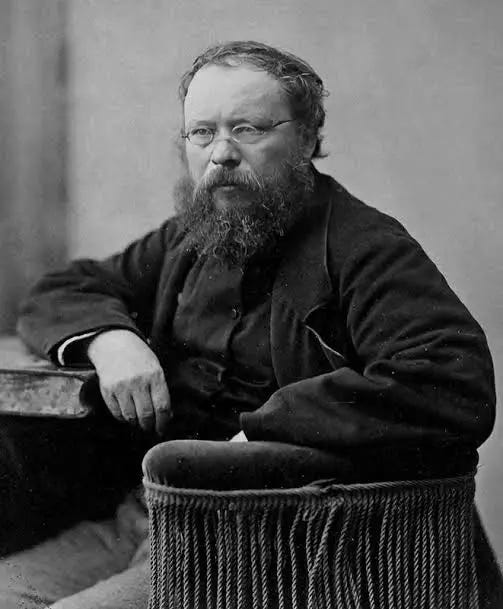
In September 1864 the International Workingmen’s association was founded in London, and by this point Proudhon was nearing the end of his life and so did not have any part of it. This new International organization aimed to unite the struggle against capitalism across countries, bringing together socialists, communists, anarchists, and other unique ideological trends; all coming together in an attempt to create a united, organized political force that could challenge the rule of capitalism and oppression of the state. Proudhon died a few months after its founding, but supporters of his theory, known as the French mutualists, were active in the organization and initially had some influence in it. They argued against labor strikes and of the idea of collectivizing land, against the concept that land could be legally granted to any body, even a collective one. For three years Marx argued against them in debates in the organization and eventually they became less popular and influential within it; but the ideas of Proudhon, and this new concept/identity of anarchism itself, inspired many others who adapted it from their own insights and perspective.
Anarcho-Socialism
One of these people inspired by Proudhon and seemingly taking up the mantle of the movement was Mikhail Bakunin. You see, the thing about Proudhon’s ideological conception of anarchism (mutualism) was that it preached against violent revolution, advising that a violent uprising would just lead to more authoritarian rulers. So to Proudhon and his followers, the strategy for achieving socialism was to create this decentralized “gift economy” alongside the capitalist one; not violently clashing with it, but developing alongside it and eventually replacing it when it proves to be a better system and renders capitalism obsolete. While this was an inspiring idea for many, Marx pointed out the inherent violence and force by which capitalism (and class society itself) operates, and this made many people lose faith in the concept of mutualism. But then comes along Bakunin, and other like-minded anarchists, and they accept that insight Marx had, but still disagree on Marx’s conclusions. Arguing against the Marxist concept of the “dictatorship of the proletariat” (the idea that the working class needs to seize control of the state apparatus and industries and democratically run them collectively), Bakunin advocated for a violent uprising by the workers and peasants united, to abolish not only capitalism, but the state itself. Bakunin argued that Marx’s concept of the dictatorship of the proletariat would just create a new ruling class, believing that any position of legal power creates oppression and is not negotiable in the struggle for a truly equitable world. He famously took an active role in the Dresden uprising in Germany (in the 1840s) and spent many years in prison for it before basically traveling all the way back around the world from Russia, through America, back to Europe. You could say Bakunin had an adventurous life but this “adventurism” is exactly what Marx criticized. Marx argued that engaging in violent clashes with the capitalist government before the masses were ready and united was a waste of time and energy, and that that time and energy should be put into educating the workers, raising their “class consciousness” so that they will understand their historical position and actually be ready to unite against their oppressors.
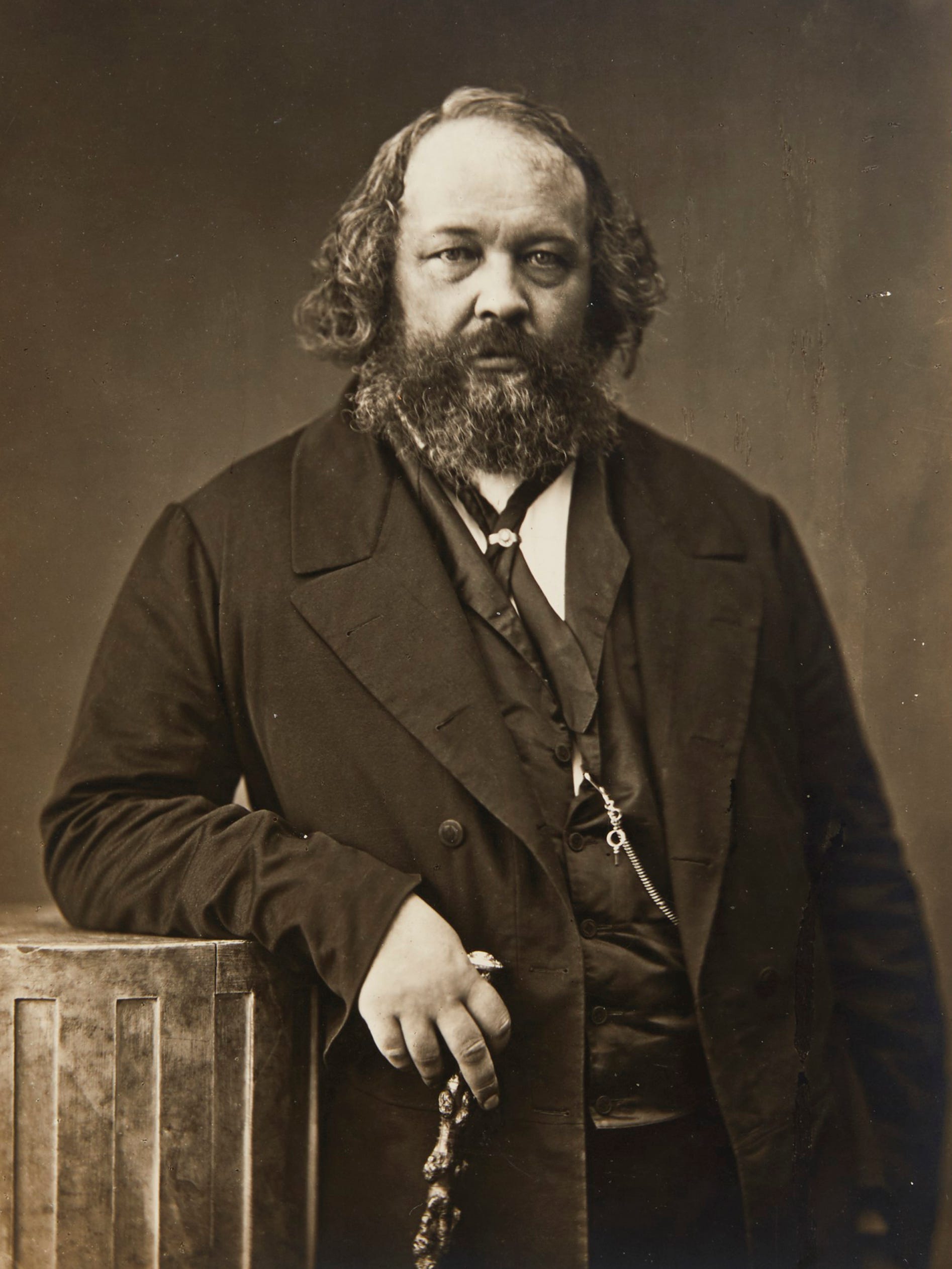
This disagreement on strategy was so serious and important to these men that it became an ideological battle resulting in the eventual dissolution of the IWA. Bakunin, who saw the immediate, violent overthrow of the capitalist state as the most important task, created a revolutionary organization with this aim called the “International Alliance of Socialist Democracy” (IASD) in 1868. He then requested that the IWA allow this organization to be a part of the IWA as its own distinct international branch. Since the IWA already was an internationalist organization, the Marxist leadership of the organization declined this request; however Bakunin and his comrades were allowed in the IWA after Bakunin claimed to have dissolved the IASD and agreed to have his group join as local chapters.
Now here is where it gets really interesting. Over the next few years, Marx, Engels, and other members of the IWA collected evidence (by intercepting letters gathering testimonies, and acquiring internal documents from organizations associated with Bakunin) showing that Bakunin and his supporters had not dissolved the IASD but instead were operating in the shadows with their own separate agenda. In private letters and internal documents, Bakunin and his supporters discussed and carried out their political strategy of basically, ‘operating in the shadows.’ Fearing that after the overthrow of the capitalist state Marxists would attempt to set up a new government, they decided that they needed a secret brotherhood of highly committed anarchist revolutionaries to guarantee any attempt to construct a new state would be struggled against by an organized collective force of power. The members of this secret brotherhood would hold no titles, or position in government, or pass any laws or decrees; only operate from within the working class, to be a part of, and lead uprisings against any form of state or institutional power.
Some historians argue that Bakunin’s secret group was not a serious threat to the IWA, but Marx took it very seriously. After years of gathering evidence, in the 1872 Congress of the organization (which some say was set up locationally to hinder Bakunin and his supporters), Marx shared it with the organization and successfully convinced the group to kick Bakunin and his supporters out of the organization (with Bakunin and most of his supporters not being present). He then had the location of the Congress meetings changed again to be in New York; since this was an international organization created and based in Europe, this move effectively killed the organization, and what is known as the “First International” by communists was ended.
Bakunin and Marx both kept expanding upon and advocating for their ideas, inspiring others until their deaths in 1876 and 1883, respectively. For these next two decades after the split of the First International, the debate over the methods of Anarchism or Marxism to achieve socialism continued to be debated, but without the unified platform and camaraderie that the IWA brought. During this time, a Russian prince would become disillusioned with the system he benefited from, renounce his title, and become one of the most famous ideological opponents of Marxist theory from an anarchist perspective, creating the ideology he described as “Anarcho-Communism.”
Anarcho-Communism and the Second International
Peter Kropotkin was indeed a wealthy prince and was stationed in Siberia as a military officer in his early adult years. His passion (and career in) for evolutionary biology led him to observe the inherent property of cooperation that many animal species seem to have, and its beneficial effects. This was very relevant for his time period because the idea of “social darwinism” was a hot new idea, which basically tried to distort the process of natural selection in Darwinian evolution to justify class society, and having a “ruling” class. His observations led him to advocate against this idea, and even further, to renounce his title and spend the rest of his life dedicated to the liberation of the working class.
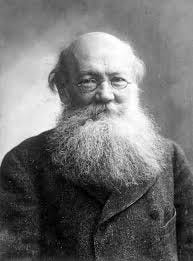
While the Marxists of Europe came together and organized a new “Second International,” bringing over 20 socialist organizations from different European countries together in 1889, Kropotkin was busy writing out his ideas, eventually releasing them in his highly influential book, “The Conquest of Bread” in 1892. In the book, he argued that all wealth is a collective product of humanity, and so it is impossible to tally up who gets what based on any “merit,” rather everything that can be used in a society is freely shared and distributed based on need. His concept of Anarcho-Communism asserted that this must be done by dismantling any form of state power and immediately setting up this alternative, horizontal system in its place.
The Marxists in this new Second International were busy debating electoral strategy in 1893, when anarchists (presumably invigorated by Kropotkin’s uncompromising anti-state philosophy) began showing up to the meetings, fundamentally disagreeing with the tactics being debated. This took time away from the work that these Marxists felt was more important than continued ideological arguments with anarchists, and so in 1896, a new policy was passed by the Marxist leadership that to be a member organization, you had to engage in “political action,” which was defined as running candidates and participating in state elections. Since the anarchists fundamentally disagreed with the concept of using state power in any sense, their ideology was effectively banned from this “Second International.”
The high-stakes friction between anarchists and Marxists that seemed to define the socialist movement throughout the 1800s died down after this final split, but that only, again, gave each side more time to develop their theories. Kropotkin would go on to publish his most famous work, “Mutual Aid: A Factor of Evolution,” in 1902. It gave more hard biological evidence that cooperation, not competition, is the primary driver of species survival and higher evolution in both humans and many animal species. This work gave the anarchist movement a scientific proof that validated their ideological struggle, and also all of those who feel in their hearts that we are meant to work together, for our collective benefit. From the point of view of materialist psychology, his work is infinitely valuable in validating the fact that capitalism’s forced scarcity and competition is against our own evolved wiring, putting us in neural states meant for outside threats not members of our own species. The scientific validation of collective structures provided a powerful ideological closure to Kropotkin’s era. It also directly inspired the movement’s immediate strategic shift toward Anarcho-Syndicalism, even planting the philosophical seeds that would eventually grow into Eco-Anarchism.
Anarcho-Syndicalism
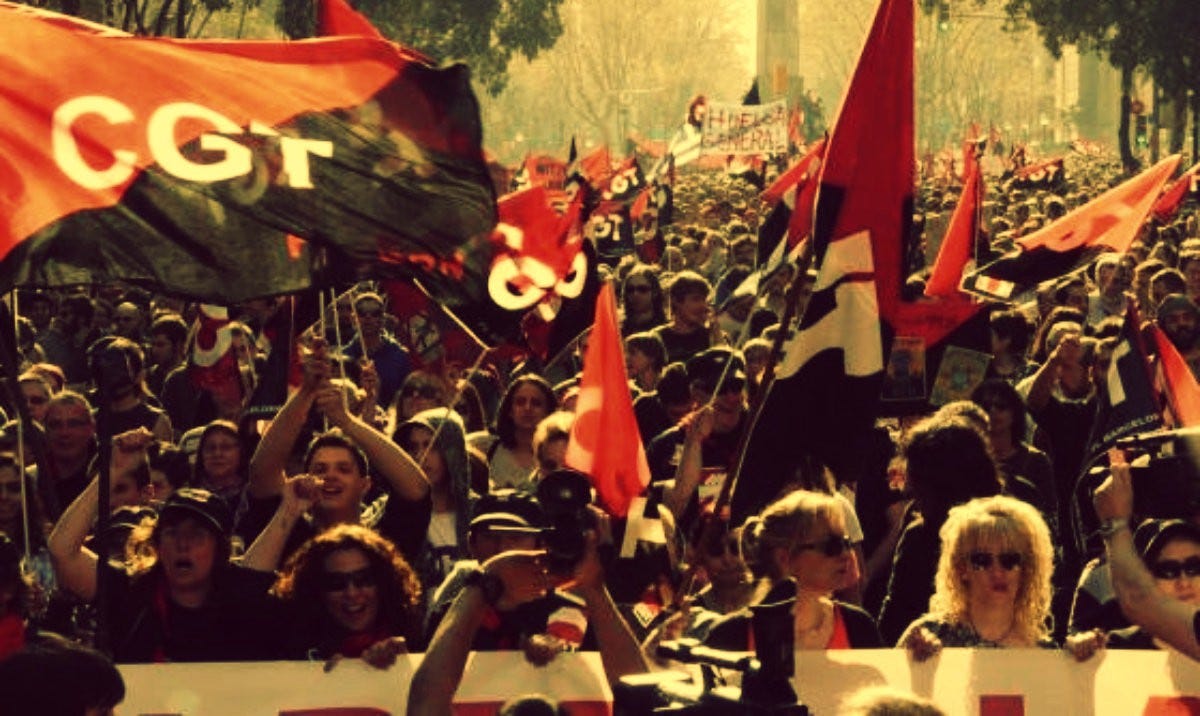
After this, the anarchist movement collectively had a shared sense that Marxism and its strategies did not align with anarchism, and that trying to work with Marxists was not an effective strategy. Kropotkin, his followers, and many other anarchists believed that the anarchist movement needed to focus on building strong labor unions with horizontal power structures. They theorized that forming these revolutionary workers’ unions as a form of “direct action” and ditching the Marxist structure of international political groups and parties was a more practical, direct way to make real change. They believed that if this idea spread and more and more workers organized labor unions this way, all the unions could unite to dismantle capitalist rule and replace it with these horizontal structures that would already be set up through the process. This was expanded upon and attempted in many different places around the world and became known as “Anarcho-Syndicalism.”
Eco-Anarchism

With the climate crisis becoming more apparent in the middle to late twentieth century, the direct focus on saving our habitable planetary environment has become a necessary focus for many people, including anarchists. While traditional Anarcho-Syndicalism focused on uniting the working class for a new kind of horizontal power to distribute goods collectively, Eco-Anarchism (or Social Ecology) expands this material analysis to include the natural environment itself. The core argument of Eco-Anarchism is that the hierarchical domination of humans over other humans is the exact mechanism that leads to the capitalist domination and extraction of nature. Therefore, you cannot solve environmental destruction without completely dismantling the coercive state and class society. Through the lens of Affective Socialization Theory, all of these anarchist currents can be understood as attempts to build Collective Agency Expectancy through immediate, horizontal structures. They explicitly reject the high Hegemonic Volatility they believe a transitional state would inherently create, seeking instead to lower Material Strain directly through localized, community-controlled resources.
Finding Common Ground
All of these various perspectives of socialism addressed in this section have so far been mainly identified by their differences; for the next section, we will examine what values or principles they all have in common, and thereby we will come to a clearer definition of what socialism, in the general sense of the word, means.
Coming Up in Part 4: In the next installment of this series, we will examine the core values that unify these various socialist perspectives. We will explore shared principles such as collective ownership of the means of production, economic planning, democratic participation, and up-down wealth redistribution. This synthesis will help cut through historical divisions to clarify what socialism fundamentally represents as an alternative economic system.
This article is a serialized, adapted excerpt from my book, What is Socialism? A Concise Analysis to Clarify the Concept. If you prefer to read the entire book at once, or want to support this publication, you can [grab the physical paperback on Amazon here].
References
Marx, Karl, and Frederick Engels. Marx and Engels Collected Works. Vol. 5, www.hekmatist.com/Marx%20Engles/Marx%20&%20Engels%20Collected%20Works%20Volume%205_%20Ma%20-%20Karl%20Marx.pdf. Accessed 5 Oct. 2025.
Sloan, P. (1937). Soviet democracy. Victor Gollancz Ltd. https://ia600100.us.archive.org/20/items/in.ernet.dli.2015.261348/2015.261348.Soviet-Democracy.pdf
Stalin, J. V. (1934, July 23). Marxism versus liberalism: An interview with H. G. Wells. Marxists Internet Archive. https://www.marxists.org/reference/archive/stalin/works/1934/07/23.htm
Adrian (釋大道). (2021, September 11). When HG Wells visited czarist Russia (1914) and the USSR (1920 & 1934)! (Russian language sources). Sangha Kommune (SSR). https://thesanghakommune.org/2021/09/11/when-hg-wells-visited-czarist-russia-1914-and-the-ussr-1920-1934-russian-language-sources/